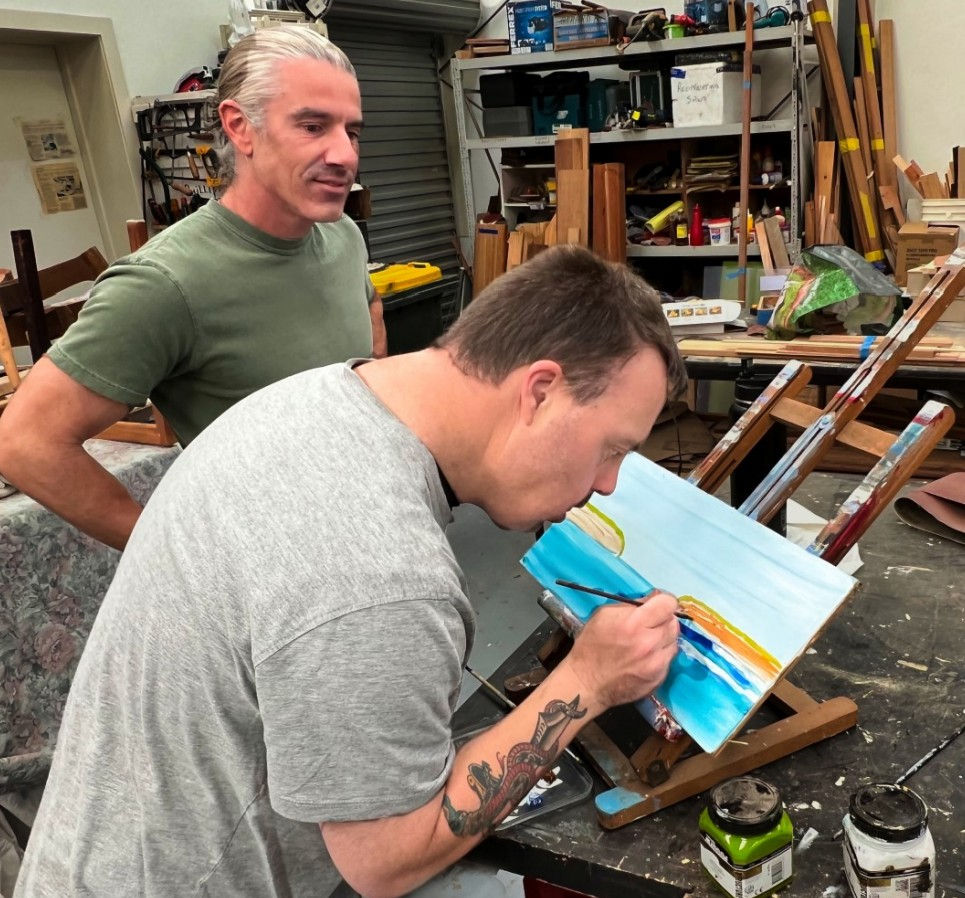
The Best Support Workers Don't Have All the Answers...They Ask Better Questions


I recently finished reading Thinking in Bets by Annie Duke, and it reinforced something that applies just as much to disability support as it does to poker, investing, medicine, or leadership:
The goal isn't to always be right. The goal is to become less wrong over time.
That sounds simple, but it's surprisingly difficult. Humans naturally defend their beliefs. Once we invest our identity, reputation, or emotions into an idea, we unconsciously begin searching for evidence that supports it while dismissing evidence that contradicts it. Psychologists call this confirmation bias. Annie Duke approaches the problem from another angle. She argues that we often confuse the quality of a decision with the quality of its outcome.
A good decision can produce a poor outcome because of bad luck. A poor decision can produce a good outcome simply by chance. Poker demonstrates this perfectly. The best poker players don't expect to win every hand, they simply make decisions that increase the probability of winning over thousands of hands.
Support work isn't poker, but the principle is exactly the same.
Every interaction is an opportunity to slightly improve the odds of helping someone build a better future.
Our Role Isn't to Solve Problems
As support workers, it's tempting to tell people what they should do. After all, we often know what seems like the obvious solution. But lasting change rarely happens because someone was told they were wrong. Instead, effective support workers guide people toward discovering solutions for themselves.
Rather than giving answers, we ask thoughtful questions.
Rather than directing, we collaborate.
Rather than creating dependence, we build capacity.
The goal isn't simply to solve today's problem.
The goal is to help someone become more capable of solving tomorrow's problems; even when we're no longer there.
That is genuine capacity building.
Curiosity Creates Better Outcomes Than Advice
When people feel judged, they become defensive.
When people feel curious, they become open.
The language difference is incredibly small, yet psychologically it changes everything.
Instead of saying:
"You need to do this."
Try:
"Let's work through this together."
Instead of standing opposite someone in an argument, stand beside them and investigate the problem together. You're no longer acting as the authority. You're becoming a partner in discovery. This lowers defensiveness because people don't feel they're being attacked, they feel they're being understood. Research consistently shows that people rarely change because somebody else wanted them to. They change when they feel psychologically safe enough to explore another possibility.
Questions Are More Powerful Than Answers
Good mentors understand something important. People don't usually want advice. They want understanding. When someone feels genuinely heard, they're much more willing to hear another perspective. That's why the best mentors spend far more time asking questions than giving answers. Questions create ownership. Advice often creates resistance. When people arrive at their own conclusions, they're far more likely to act because the solution belongs to them.
Questions That Encourage Truth-Seeking
Some of the most useful questions include:
Help me understand how you arrived at that conclusion.
What evidence are you using?
What evidence would change your mind?
How confident are you—from 0% to 100%?
What information might we still be missing?
If we could run a small experiment, what would we test?
What's the worst outcome if we're wrong?
What would success actually look like?
Notice that none of these questions accuse. None require someone to defend themselves. Instead, they invite exploration.
Small Experiments Beat Big Solutions
Behavioural psychology tells us that overwhelming problems overwhelm people. Large goals create paralysis while small experiments create momentum.
Rather than asking:
"How do we completely fix this?"
Ask:
"What's one small thing we could try this week?"
Success builds confidence.
Confidence builds action.
Action builds identity.
That's how lasting behaviour change occurs.
Working With Adults
Imagine someone receives blood test results showing elevated cholesterol.
A defensive response might be:
"The test must be wrong. I've always eaten well."
A truth-seeking conversation sounds different.
Instead of arguing, ask:
What are the possible explanations?
Which factors can we control?
Which factors can't we control?
What evidence would help narrow the possibilities?
What small changes would you actually enjoy making?
Perhaps genetics plays a role.
Perhaps diet.
Perhaps exercise.
Perhaps stress.
The point isn't to prove anybody wrong. The point is to gather evidence together. You aren't trying to win an argument. You're trying to improve future outcomes.
Why Children Need a Different Approach
Children are different.
Adults can usually understand concepts like probability, uncertainty and delayed gratification.
Children are still developing those abilities.
Their thinking is much more concrete.
A child who scores 55% on a maths test may conclude:
"I'm bad at maths."
An adult recognises:
"That test measured what I know today."
Those are very different conclusions.
Children also attach mistakes to identity.
When a teacher becomes frustrated, children often believe:
"My teacher doesn't like me."
Rather than:
"My teacher doesn't like this behaviour."
Separating identity from behaviour takes years to develop.
Why Boundaries Matter
This is also why healthy boundaries are so important.
Children sometimes interpret "No" as:
"You don't love me."
In reality, the opposite is usually true. Boundaries communicate care and without boundaries, children can unintentionally learn that emotional outbursts achieve desired outcomes.
Over time this may lead to:
poor frustration tolerance
poor impulse control
difficulty accepting "no"
unrealistic expectations of others
challenges in friendships, school and work
reduced accountability
One of the greatest gifts adults can give children is learning that disappointment is temporary and manageable. Resilience isn't built by removing obstacles. It's built by learning to overcome them.
Supporting Children Through Questions
Imagine a 10-year-old receives 55% on a maths test.
An unhelpful response is:
"Why didn't you study harder?"
Immediately the child feels judged.
A better conversation might sound like this:
Parent: "Let's look at it together. Which questions felt easiest?"
Child: "The multiplication."
Parent: "Great. Which questions felt hardest?"
Child: "The word problems."
Parent: "Excellent. Now we know exactly what to practise."
The test becomes information rather than a verdict. Mistakes become feedback. Learning becomes the objective.
Truth-Seeking Is a Lifelong Skill
Whether we're supporting children, adults, or people living with disability, the principles remain remarkably similar. Replace judgement with curiosity. Replace certainty with humility. Replace arguments with experiments.
Ask:
What does the evidence tell us?
What might we be missing?
How confident are we?
What could we test next?
Because the people who improve the fastest aren't usually the people who are right most often. They're the people most willing to update their beliefs when new evidence appears.
As Annie Duke reminds us:
"The quality of a decision is not determined by the quality of its outcome."
Good decisions sometimes lead to bad outcomes.
Bad decisions sometimes lead to good outcomes.
The objective is not perfection.
The objective is continuously improving the quality of our thinking.
For support workers, that mindset changes everything.
We're no longer trying to have all the answers.
We're helping people ask better questions.
And better questions often lead to better lives.